Thursday, December 15, 2016

Video Chat Apps

With the Holidays approaching many people will try to share their holiday with family and friends electronically. Today I will look at some options to video chat with friends or relatives and discuss their strengths and weaknesses.


Facebook Messenger


Strength: Easy to Use and Multi-platform (iOS, Android, and web browsers)

Weakness: One on One only UPDATE: 12/20 You can now chat with groups (see also: https://techcrunch.com/2016/12/19/messenger-group-video-chat/ ) Setting up a Facebook account if they don’t have one


FaceTime


Strength: Easy to Use

Weakness: Apple Devices Only and only one person at a time


Google Hangouts


Strength: Multiplatform (iOS, Android, Web browser plug-in) and up to nine people at a time

Weakness: Requires a Google Account (which may be a hurtle for less tech inclined relatives)


Skype


Strength: Multiplatform (iOS, Android, Mac, Windows, Linux),  up to 25 people at a time

Weakness: It can act wonky in my experience; users have to set-up an account; users receive spam


Personally, I use Google Hangouts with friends and my siblings but my older relatives and wife prefer FaceTime because they have Apple devices and it is as easy as answering the phone. If you wanted to share your holiday with all your friends, family, and acquaintances on Facebook you can use Facebook’s new Facebook Live feature that it has been advertising. It will also allow people to watch it after the event but it is more like broadcasting video than chatting and you might consider it too intrusive. 

Thursday, December 8, 2016

Photo Scanning Apps

Google recently released a photo scanning app that had mixed reviews. I began to wonder if there were other apps that did the same thing, and which is the best. I did a side by side comparison.


CamScanner (Free) Android and iOS - Usually used for document scanning this app does really well at lining up the photos, cropping, and sharing. The photo quality was good but not great. The photo adjustment / filters features were good not great. https://www.camscanner.com

CamScanner scanning interface
CamScanner adjustment interface
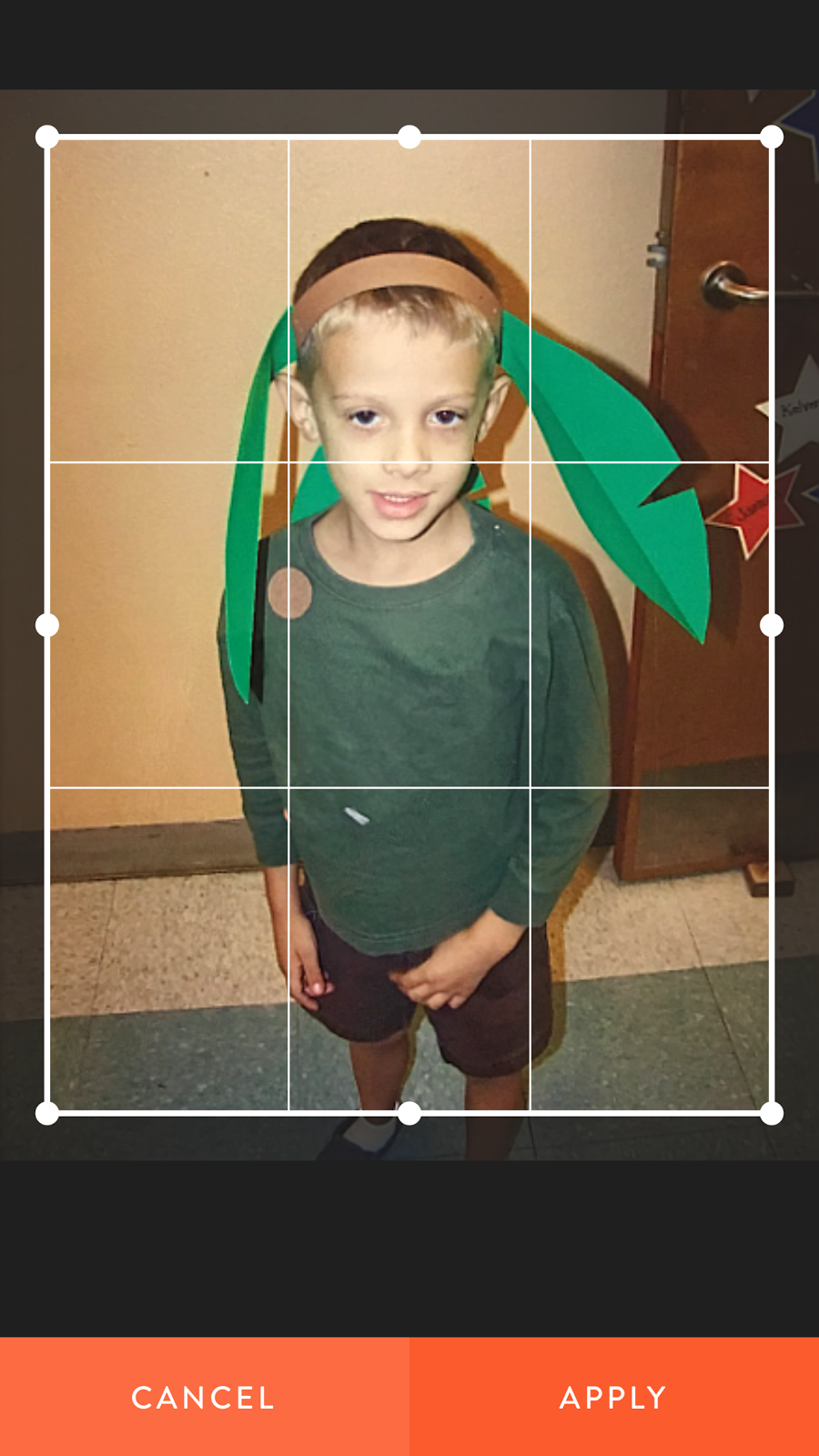
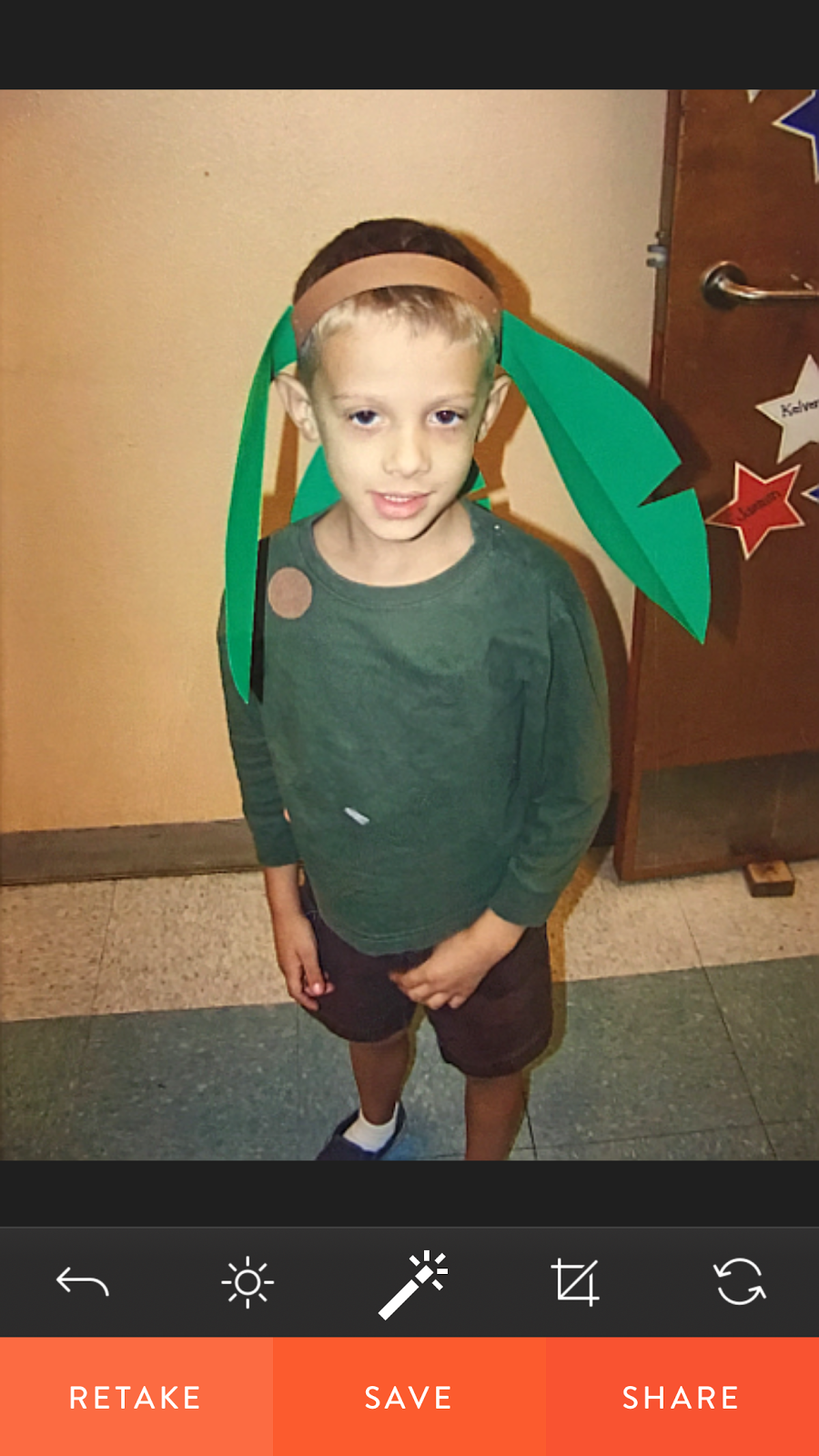
Heirloom (Free) Android and iOS - Heirloom had the nicest user interface. It also has really nice photo adjustments and filters. The app had the best photo quality of the apps tested. The app's focus is on album creation and sharing, but users would have to convince friends and family to download the app. https://www.heirloom.net/

Heirloom cropping interface
Heirloom adjustment interface


PhotoScan by Google (Free) Android and iOS - The app does a good job of trying to eliminate glare and automatically cropping but I found that the photos were a bit blurry. It does a great job at saving and sharing but no adjustments or filters. https://www.google.com/photos/scan/


PhotoScan by Google scanning interface

Pic Scanner (Free with in-app purchases) iOS only - I found the app easy to use. The app tells users that they have the photo lined up. It does well at cropping but unfortunately the app limits the number of photos users can save or share to twelve (more than that costs $2.99). http://m.appinitio.com/

Pic Scanner scanning interface
Pic Scanner adjustment interface


Side by side with each app.
PhotoScan by Google

Pic Scanner

Heirloom

CamScanner


Side by side and I included one with the Camera on my iPhone.

PhotoScan

Pic Scanner

Heirloom

CamScanner

iPhone Camera

Side by side with my top three favorites Cam Scanner, Heirloom, and the iPhone camera.

CamScanner

Heirloom

iPhone Camera

These last two were Heirloom and the iPhone camera with both I used the adjustment and filters.
iPhone Camera with adjustments

Heirloom app with filter
I felt that the Heirloom app performed best and the iPhone was a close second. From all my research it seems that flat bed scanners or a SLR camera with a macro lens are superior for getting the best quality. This website gives instructions for taking the best scans possible of your photos with either one  https://www.cnet.com/how-to/how-to-scan-and-archive-your-old-printed-photos/

Thursday, December 1, 2016

Note / Productivity Apps

Disclaimer: I chose these apps / software families because they are able to be used on pretty much every device. I did not review or compare Apple's "Notes" due to the fact that it cannot be used on Android and has a sub par experience on Windows computers and mobile devices.

Evernote 
I've used Evernote for 5 years. They have a family of apps that integrate so users can take notes, save pictures or audio, copy information from the Web (using a browser extension), draw or hand write notes (using the Penultimate app), and scan and then save documents (using the Scannable app). They also had a food and recipe app that they discontinued. This software family for a while was a favorite of tech users especially heavy users of "Productivity software". Recently they made changes limiting uploads to 60 megabytes per month, which is pretty low as storage goes, and they recently raised prices on premium plans. The paid versions of Evernote now cost $34.99, $69.99 and $120 per year, based on the amount of storage a user requires. Downloading notes is not difficult but the formats you have to choose from are not friendly (proprietary EXM or HTML) it would be better to copy and paste but that is time consuming. There are some nice word processing features on the web / desktop version that are not available in the app. Users can share their notes, collaborate (even chat with people in real time), make tags, create separate notebooks, insert items from Google Drive, save audio or photos, make audio notes, attach files, and create shortcuts. Evernote also integrates with IFTTT (If This Then That) and has helpful widgets for iOS messaging, iPhone, and Apple Watch.  I chose these apps / software families because they are able to be used on pretty much every device. I did not review or compare Apple's "Notes" due to the fact that it cannot be used on Android and has a subpar experience on Windows computers and mobile devices.


Google Keep 
Google Keep allows users to take and save pictures and record audio notes. What you save counts towards each Google account's allotment of data which is 17GB (this is for all of your Google Services, to learn more about items that count and those that don't read this: ) There is no monthly restrictions on file sizes. Users can add collaborators, share notes, change the color of a note which also changes the background color, make a copy, create reminders, pin a note so that it remains at the top of the list, create check boxes, and create labels. There is an archive feature for notes you are not using but want to store long-term storage. Some of the downsides I have read is that there is no undo button for mistakes, no revision control, and there is no easy way to download notes. I had trouble finding my notes in Google Drive, it should be easier in my opinion. There is not a way to do handwritten notes in Google Keep. Like Evernote there is a browser extension. 


OneNote 
Microsoft has their own productivity app that comes built into Windows 10. It is extremely handy when using a Surface product because when you click the stylus the OneNote app opens up. OneNote is available on any device with apps or a web browser. OneNote allows users 5GB of OneDrive storage (previously 30GB, there are some grandfathered users) but if you are an Office 365 user it is unlimited. Similar to other productivity apps it allows users to share, collaborate, make handwritten notes, save audio or photos, add file attachments, and has a browser extension to save web information. The online interface is very similar to other Microsoft Office products like Word. OneNote features that are not present in the other productivity offerings are: version control, changes by author, adding in tables, Office integration, and inserting symbols. I personally would have liked if OneNote allowed handwriting / document markup with your finger on PC, Mac, iOS, and Android like they do on Windows mobile devices.  


Ratings:  
  
Features: OneNote  
  
User Interface: Evernote  
  
Storage: Google Keep  
  
There are things to like about each of the productivity products. I guess I would suggest each user use the one that offers what they value most: features, interface, or storage. I'd also say that if a someone uses an Android they would probably prefer Google Keep, if Windows Mobile then OneNote, and if Apple then Evernote The pictures that accompany each review give you a glimpse at the 3D Touch featuresuser interface and workflow, and browser extensions for each, to help make your decision.


Thursday, November 17, 2016

Securing Your Digital Life


So much of our lives now occur on smart phones and computers that if they were to be compromised a lot of personal details could be gathered very quickly. The list below is not comprehensive but a starting point. I will start with easiest and most important and go to most difficult and less important.


Tip #1 Enable a passcode on your smart phone.

If you are using a thumbprint, that is pretty good but recent court cases show that the government can force you to open your phone with your thumb / finger print however they cannot force you to give a passcode. It has also been easier for hackers and other security researchers to find a way past print readers than the passcode system.


Tip #2 Enable two factor authentication on your e-mail.

Your e-mail can be a single point of weakness. Weak passwords, leaving your e-mail signed into a computer, or accidentally revealing your password by reusing it on a site that gets hacked can leave your e-mail open to access. What’s the big deal? Well, your e-mail address is usually where users send password reset requests at other websites. Your e-mail can also provide a treasure trove of information from your previous correspondence and save e-mail, such as where you shop, bank, work, relatives, friends, social media accounts, and much more. Once in an attacker usually changes the password to lock you out and proceeds to do as much work as possible before you can alert the proper people. Two factor authentication only allows you or the person who has access to your smart phone to have the the two keys: your password and the one time computer generated code.


Tip #3 Use strong passwords and a password manager.

Hacks on a multitude of websites illustrate just how many weak passwords people use such as Password1234 or 123Abc. The best thing to do is to use a phrase that has letters, numbers, symbols, and upper / lower case such as !ts@lways5unny. There has been a debate about whether password managers are completely safe because users are putting all their passwords in one place and some have been hacked, but it is much safer than reusing passwords or using weak passwords and the hacks on these password managers yielded unusable information. I recommend LastPass it has so many great features (password generator, secure notes, two factor, alerts you when a site you use has been breached, security audit) and now it is free to use on both computers and smartphones https://www.lastpass.com/


Tip #3 Use HTTPS when visiting websites.

Websites with HTTPS are using a more secure web browsing protocol. You can easily make sure that you are using HTTPS when available by installing an extension HTTPS Everywhere for Chrome https://goo.gl/IDZ1I and Firefox https://goo.gl/DduiT4


Tip #4 Use a secure messaging app that encrypts your messages.

Apps like Signal, WhatsApp, and Wickr provide end-to-end encryption which means that only the people sending and receiving the message can read a message because they have the computer generated keys to unlock the code encasing the message. If you want links to these messaging apps, to see a list of others, or to learn more visit: https://www.eff.org/secure-messaging-scorecard


Tip #5 Use encrypted e-mail.

There are e-mail programs that allow you to use PGP encryption to send and receive messages but users usually have to be pretty tech savvy to do it on their own. Now there is an easy solution that works both online and on your smartphone. ProtonMail was developed in Switzerland at CERN and uses some of the industry best encryption and security. Easy to use and free at: https://protonmail.com/


Tip #6 Turn on full disk encryption or use an encrypted cloud service.

Both Windows https://goo.gl/khqIGi and Mac https://goo.gl/AVYgQh have built in full disk encryption that ensures that only the person with the password can read / use files stored on your computer. If you are more of the cloud storage type there is a very secure, very inexpensive solution with SpiderOak https://spideroak.com/solutions/spideroak-one


Tip #7 Sensitive searches should not be done on Google.

I am a fan of Google but they collect a lot of data on their users. If you are doing a search that you do not want to receive ads related to or made a part of the profile that Google has about you use DuckDuckGo https://duckduckgo.com If you want to erase your Google search history, check out this article https://goo.gl/DnwWnh


Tip #8 Incognito Mode / Private Browsing isn’t completely anonymous

Unfortunately there is a lot of information that can still be gleaned from you even when browsing the Internet in this fashion. Use the Tor browser or a Tor enabled app for your mobile device. This will allow you to hide your IP address (where you are physically) and will delete any cookies / cache after you end each browsing session. Learn more at https://www.torproject.org

Sources that helped:


EXTRA {in the news} :

Facebook has had a hands-off approach letting fake news be handled the same as real facts. Some feel that Facebook has a duty to protect its users from misleading information. The articles below discuss these discuss the issue in far more depth and get into some basic education about media literacy.

Probe reveals stunning stats about fake election headlines on Facebook https://goo.gl/mM5ylg

From Hate Speech To Fake News: The Content Crisis Facing Mark Zuckerberg https://goo.gl/KWVQEK
I write fake news that gets shared on Facebook https://goo.gl/YgKUil

An Extremely Helpful List of Fake and Misleading News Sites to Watch Out For https://goo.gl/InpdYL

Quiz: Can you spot the fake stories? https://goo.gl/1jnYNd

In the war on fake news, school librarians have a huge role to play https://goo.gl/2fcWdv


Thursday, November 3, 2016

Save it for Later

There are so many great articles to read online these days but sometimes you need to save it for later. There are apps that help you save these articles in a format that makes them easier to read by stripping the article from the website and downloading it into the app. The two apps that I will review both are multiplatform which means they work on every type of device so you can find an article on your desktop computer, save it using a browser extension, and then read it on your phone later. Both companies have great how to videos on their websites. I decided not to include the links to all the app stores but those links can be found on each company’s website. I think that each app has its strong points and for users it will ultimately be about style. I really like Pocket because of the interface design, tags, and recommendations but dislike that it has ads.

I was inspired to write this week’s review based on a recent episode of Android App Arena https://twit.tv/shows/android-app-arena/episodes/120 and the fact that Instapaper this week announced that all of their premium features are now free http://blog.instapaper.com/post/152600596211

Instapaper (Free) Android, iOS, Chrome, Safari, Firefox, Amazon – After signing up for an account Instapaper sends an e-mail to walk new users through the process of using the app and browser extension. Users can customize their reading experience by changing font, spacing, background color, and brightness. There is a really interesting speed reading feature that shows you one word at a time quickly. The menu also has a video category so you can also curate YouTube videos or the ones embedded in an article. A lot of users like the newspaper like layout. There is a nice "Notes" section that users can save highlighted text and notes about what they've read. The app suggests articles based on your reading preferences and ones that are popular with other Instapaper users.


The picture below shows the Chrome extension in action:

The pictures below are some screenshots of the app:


Pocket (Free with premium features) Android, iOS, Chrome, Safari, Firefox, Android – Easy to use with a bright and friendly interface. Users can customize font type, font size, switch to the web view, and change background color. Saving articles is a breeze by either using a browser extension or e-mailing it to your pocket account. Unfortunately, other customization options are a part of the premium package. The app can read the article to users. Users can put tags on articles so that they can quickly find what they are looking for in their saved list. The app has ads that can be removed if you purchase the premium package. Where the Pocket app was superior was in article recommendations. Users can get article recommendations from the Pocket community, their contacts, social media connections, writers, and influencers. The app’s premium features: dark mode, eliminate ads, further customization, and unlimited archival storage that saves an article even if the website version goes away, cost $4.99 a month or $44.99 a year.


The picture below is the Chrome extension in action:

The pictures below are screenshots of the app: