Thursday, September 22, 2016

Messages versus Allo

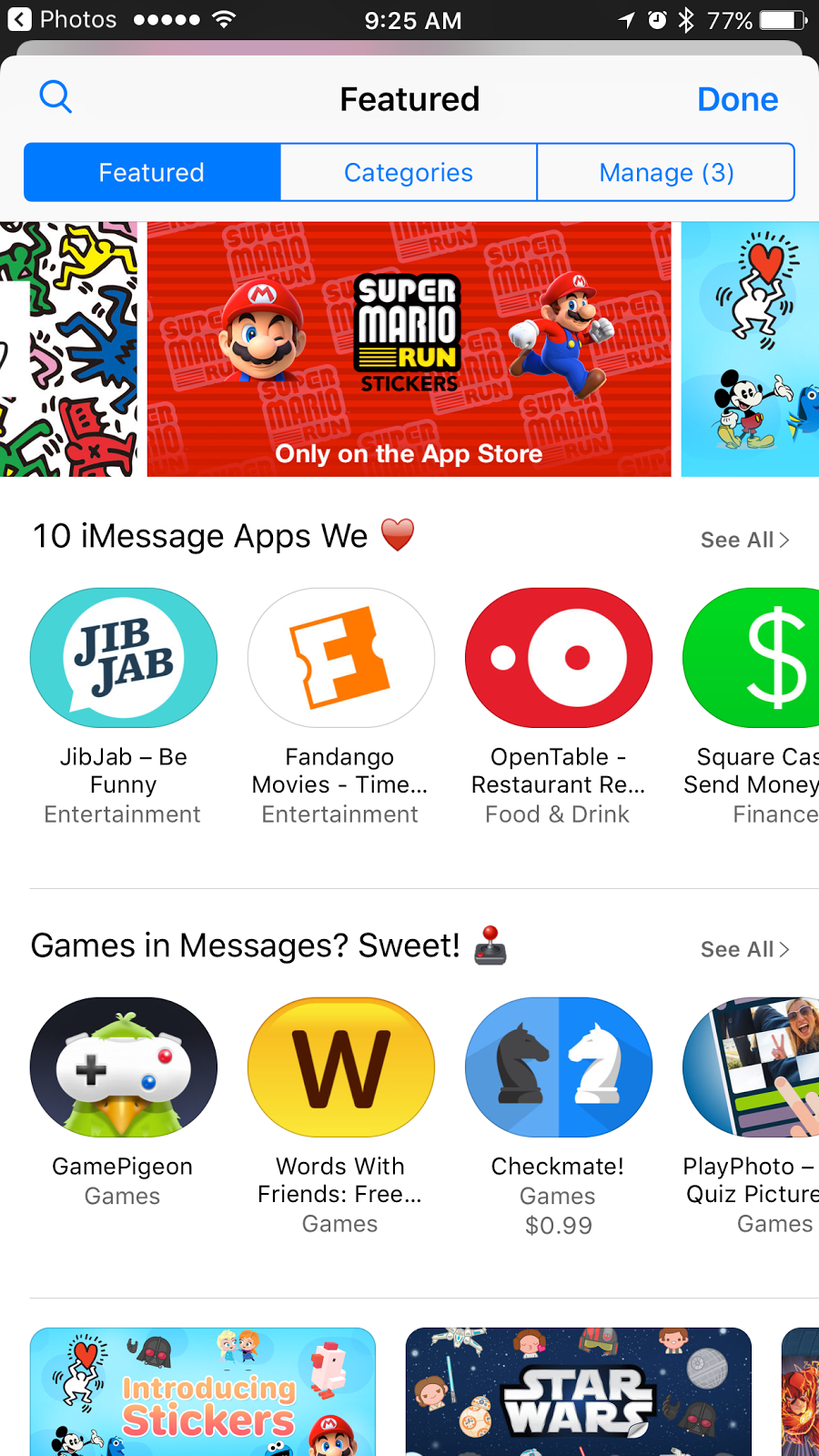
Last week Apple came out with one of their biggest updates to their mobile operating system called iOS 10. This update added a lot of different functions but by far the most talked about was the changes to its Messages app.

I took a bunch of screenshots of a conversation I had and tried to show all of the different things you can now do.


You can add memes.


Add stickers to a conversation or a photo.


Draw on a photo.


Send message effects.


Send in Loud, Gentle, and what I thought was really cool… invisible ink.


You can play games in your messages.


There are Digital Touch options like sending your heart beat, a burst, drawings, and much more


Canvas, Evernote, and other productivity apps have Message features so you can share easily.


I could go on and on but this week Google came out with messaging app called Allo. It has some of the same functions that Apple’s messages.

Change font size.


Share location.


Send audio.


Stickers (but not really as good a selection as Messages)


Its artificial intelligence suggests responses based on your


What really makes it special is the Google Assistant. It can find restaurants, movies, and weather. 
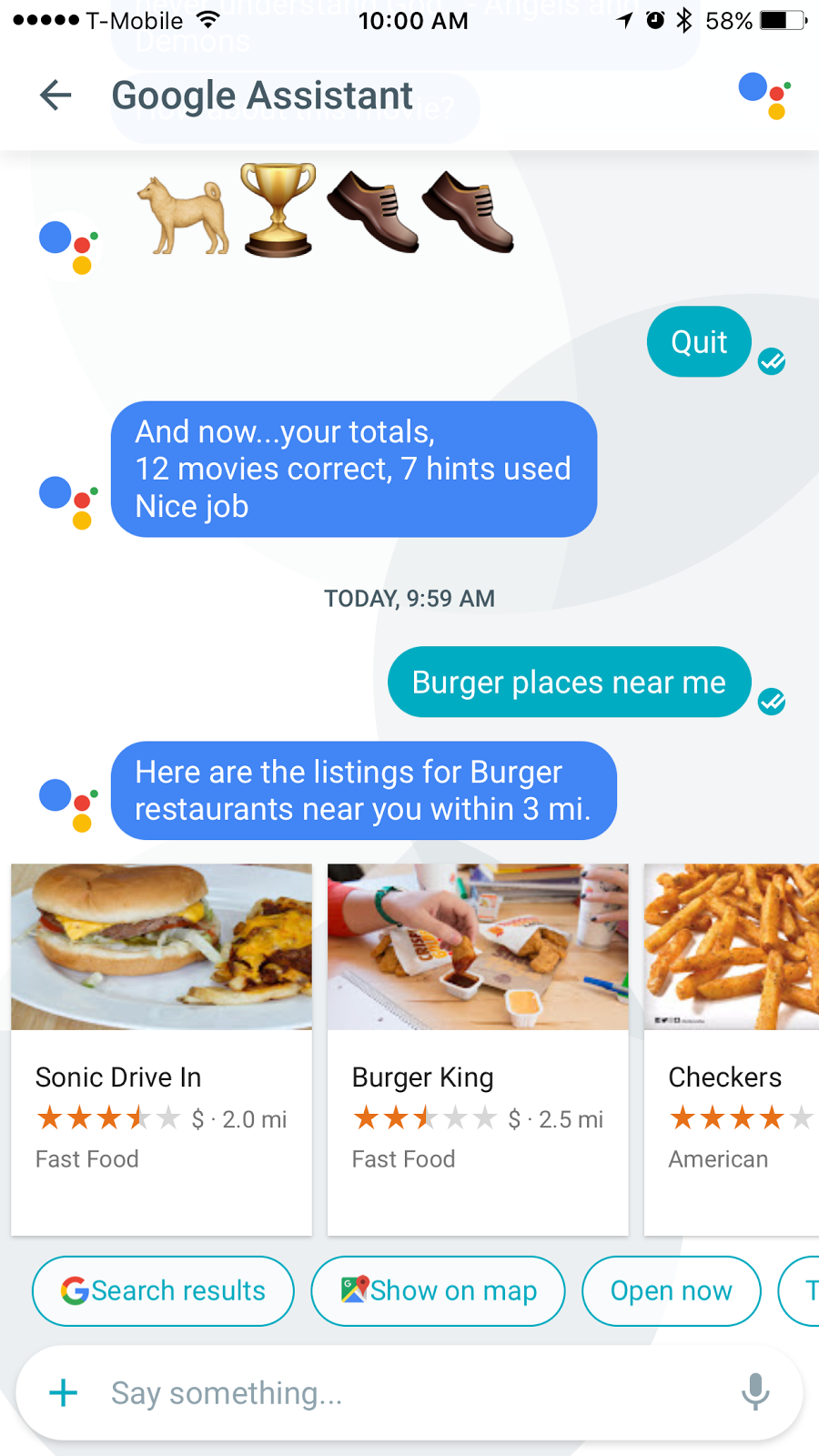

You can have it pull up your travel data. It can play a game with you.


You can delete your conversations, block users, and more in your settings.

Talking with a friend that has an Android phone I found out that there are certain functions like sending files from Google Drive or Google Photos from within the app only available on Android. Allo is not available on desktop devices or older Android devices. Apple's Messages for iOS 10 only works on iPhone and iPad so all of the functions are not available to non-Apple users or at this time on the Mac.

One of the issues that some technology reporters have called “disappointing” and “concerning” is that Google is storing and tracking users’ conversation data. There is an “Incognito” mode where messages are encrypted end-to-end, meaning that it is private but you have to set that up for each conversation you begin. Many people feel that privacy should be by default. In contrast, Apple does not collect, store, or view conversation data.

Thursday, September 15, 2016

App In-Depth: Google Maps

One of the few "in-depth" reviews that I've done was for Waze. I still use Waze but Google Maps has a lot of great features that Waze lacks and there are certain features that they both share.


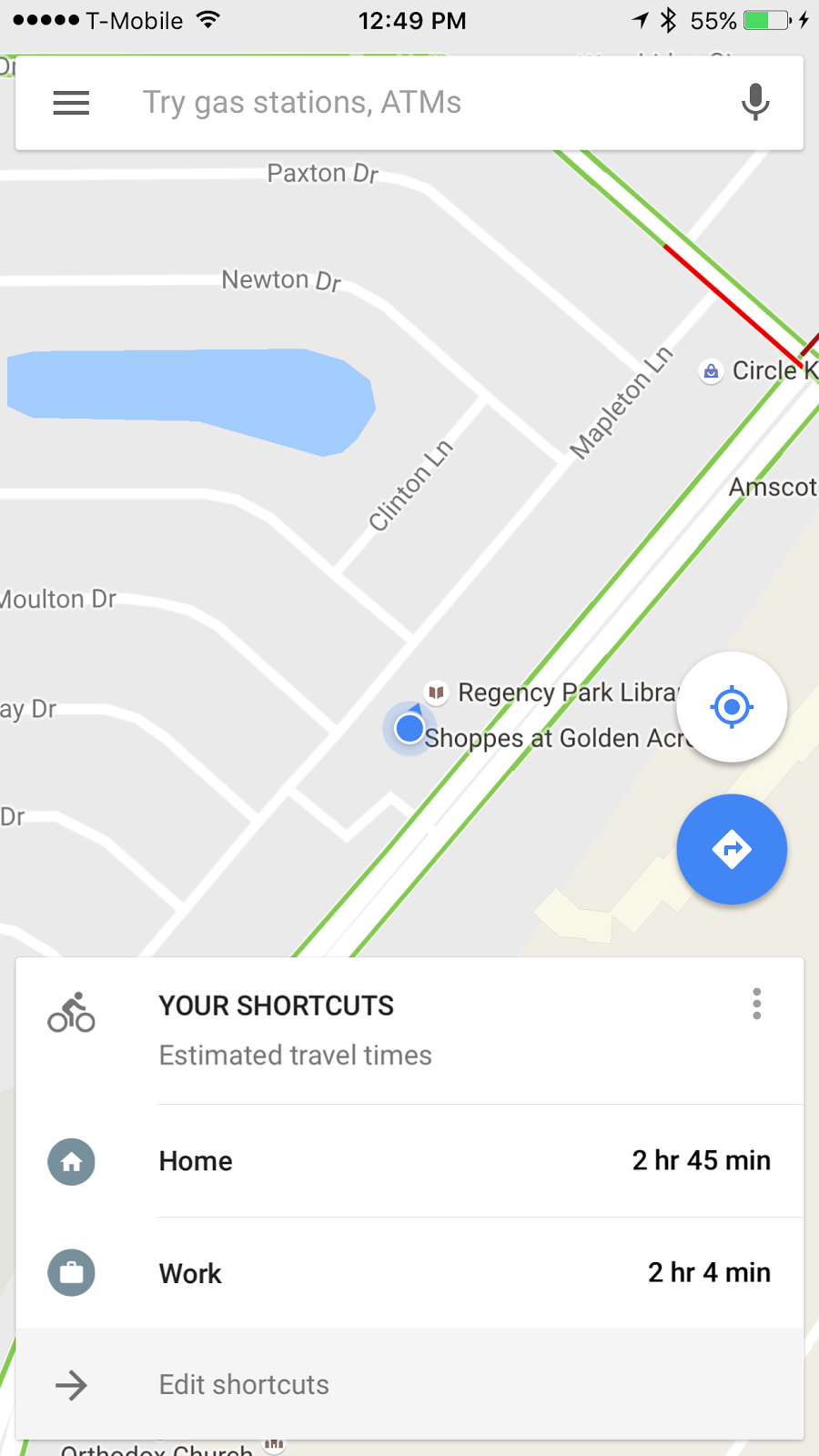
Google Maps remembers your home, work, and places that you have visited in the past. This is helpful for someone forgetful like me who remembers the street name or place name but not the exact address.


Google maps can tell you about places near you that are: restaurants, parks, gas stations (and their prices, groceries, pharmacies, and much more.

Routes are available for car, walking, bicycling, and mass transit (all kinds actually). I found this feature incredibly useful in Portland, Oregon. It would tell me when the bus would come by the bus station near me, how long it would take to get to the destination, and how much it would cost. There were times that I could see that walking would take the same amount of time. I could also get an alert from the app when it was time to leave the house and head to the bus stop.


As a Google Maps user you can easily provide reviews and user data about places you visit. You collect points and there is a program in place to provide rewards.


If you want a satellite or terrain view that's available in the app as well. With one of the most recent updates you can also download maps for offline viewing so if you are using a tablet or have a limited data plan you can download your map for later use.


The "Explore" feature gives you suggestions for places that you might enjoy for different categories.

The app has voice recognition so you can search for a place without typing, which is especially helpful when driving. The app shows traffic on the map and alerts you when you to changing traffic. Unfortunately I do not have a screenshot but one of the other things that is helpful is the app shows arrows in the top left of the screen of where each lane is going so you can decide what lane you want to get in or avoid. Another new feature is that the app will tell you the speed limit of the road you are traveling on. If you prefer to just look at the turn by turn instructions you can tap the grey bar at the bottom where it lists the amount of time and it will show you each turn and the distance between each turn.


With 3D Touch on iPhone 6S and 7 you can press to launch a quick navigation to your shortcut locations. If you have an Android you can set-up widgets that show you how long it would take to drive from your current location to each of your shortcuts.

Google Maps is available for:

Android - https://goo.gl/fjwt1
Apple (iOS) - https://goo.gl/4btbGI
Online - https://www.google.com/maps/

Thursday, September 8, 2016

Search Ads

I decided to write about this topic because recently I heard an episode of the podcast “Reply All” where someone lost their camera in a taxi in New York City and the website that they found through a Google search said that they would help them recover their item for $47. The website was misleading, it doesn’t do much to help. here are a lot of other websites that mislead consumers into thinking that they are official or legitimate but in the fine print they explain that they are not official or affiliated with the legit company or government entity.. To hear all the examples and an in-depth discussion you can listen here: https://gimletmedia.com/episode/76-lost-in-a-cab/

One of the things that I have seen occur in the library is that patrons will accidentally navigate to websites that charge them for services that are not necessary, or collect personal information to sell to advertisers. When people search for something on Google, Yahoo, or Bing many times they often mistake the websites listed as ads for non-profits, government, or free services. Unfortunately, the disclaimers on the search websites can be small and not easily noticed.

I have two examples below based on recent patron interactions. One patron searched for “McDonald’s application” and they used a website that gave their website to marketing companies that sent them spam to their e-mail address and phone calls trying to sell services. You can tell from the examples where the arrows are red are for websites that are not connected to McDonald’s. The word ad is listed to the side but it is small. Sometimes there is a disclaimer. This seems misleading at best and a scam at its worst. You can see the correct website with a green arrow beside it. When you are searching on mobile it can be harder to tell which ones are advertisements.

The other example was a patron that was searching for a way to “create a resume”. As you can see in the examples below have web addresses that end in “.COM” this denotes company, and they all have “Ad” in front of the web address. What I noticed is that people will mistake the website for a free resume creation tool but when someone wants to print or download the website requires that they pay. In a lot of cases the peron spent hours working on a resume and are now held hostage or have to start all over.

When you are searching for a government website try to make sure that it ends in ”.GOV” or that it is the “official website” of a federal, state, or local government. For instance if you are looking for a tax form you want to make sure that the web address begins with https://www.irs.gov . I have seen websites for the most common searches related to government such as grants, unclaimed property, government auctions, etc. that direct people to websites asking you to pay for forms, help, or searching services. Please double check the web address and try to notice when searching whether there is any indication that this could possibly be an “ad” or “sponsored site”.

When in doubt… ask a librarian!

Also there have been two scams where people claim to be from the IRS or Microsoft. These are scam! Neither will ever call and claim that you owe them money.


Friday, August 26, 2016

Cord Cutting

I have gotten asked several times about cord cutting and streaming.
The usual streaming services: Hulu, Netflix, and Amazon are highly recommended.  Each has their strengths and you can choose based on what you like to watch. I would also like to suggest three other alternatives that you may or may not want to consider.

Kodi (otherwise known as XMBC)  – This open source software allows you to create a home theater using a computer of your choice. If you have ever seen advertisements trying to sell you a “stream everything” type box, this is what they are selling. It is a lot like a Roku style box but you can create one of these yourself and because it is open source. The companies that sell Kodi boxes as “stream everything” consoles are using add-ons that allow for illegal streaming. If you make one yourself you can limit it to legal services and you can create one inexpensively. A Raspberry Pi , old Desktop, or old laptop could be used for as your device. This webpage has a step by step guide to creating a Kodi box otherwise known as an XBMC (Xbox Media Center) http://www.cnet.com/news/how-to-set-up-a-home-media-center-with-kodi-xbmc/ Here is the Kodi website to learn more about the software or download it: https://kodi.tv/


Playstation Vue – this service allows for local and cable channels to be streamed on any device. You can use your computer, mobile device, or a Kodi enabled box. The plans range from $29.99 a month for 55 channels to $44.99 for 100 channels. It is month to month so you can cancel at any time. To learn more, visit:  https://www.playstation.com/en-us/network/vue/


Sling TV – similar to Playstation Vue Sling TV has been in the streaming business longer and you can use it on pretty much every device. They have offered some great deals and promotions in the past. Their service allows users the ability to record programs like a DVR (digital video recorder) to save programs so that they can easily watch on multiple devices. Their pricing right now starts at $20 for 25 channels all the way to $40 for 100+ channels.  Learn more here: https://www.sling.com/
If you want to use a computer that wirelessly streams your Kodi system you can use a Chromecast https://goo.gl/tKCRFg
If you want to see a video review of Kodi and Playstation Vue, you can watch here: https://goo.gl/HDsPGx

Let me know any ideas for reviews / articles.

Thursday, August 18, 2016

Pact App


I thought that I would do an in-depth app review about an app that I have mentioned a couple times in the past because I know that there are a lot of people trying to live healthier. This app is called “Pact” and you can make a small amount of money each week if you do health activities that you promise to do. The downside is that if you don’t do them the penalty is a lot higher than the money you make. The average reward for a week if you participate in all three pacts is between $1.75 and $2.25 the penalty per item missed is $5.00. You can see how it might be possible to lose a lot of money on this. I have made an average of about $2.00 a week for over a year.


Here is a look at the app’s menu. It has a nice “Tutorial” area that explains how “Pact” works and how you record your activities. There are three pacts: exercise, food logging, and veggie. Each pact has certain rules / limitations. For instance, with the exercise pact you have to do 30 minutes of activity. The exercise can be tracked with step counting, motion tracking, or gym check-in. You can only count exercise once a day. So this means you cannot make up for a missed day by going to the gym twice on another day or doing an hour of activity.


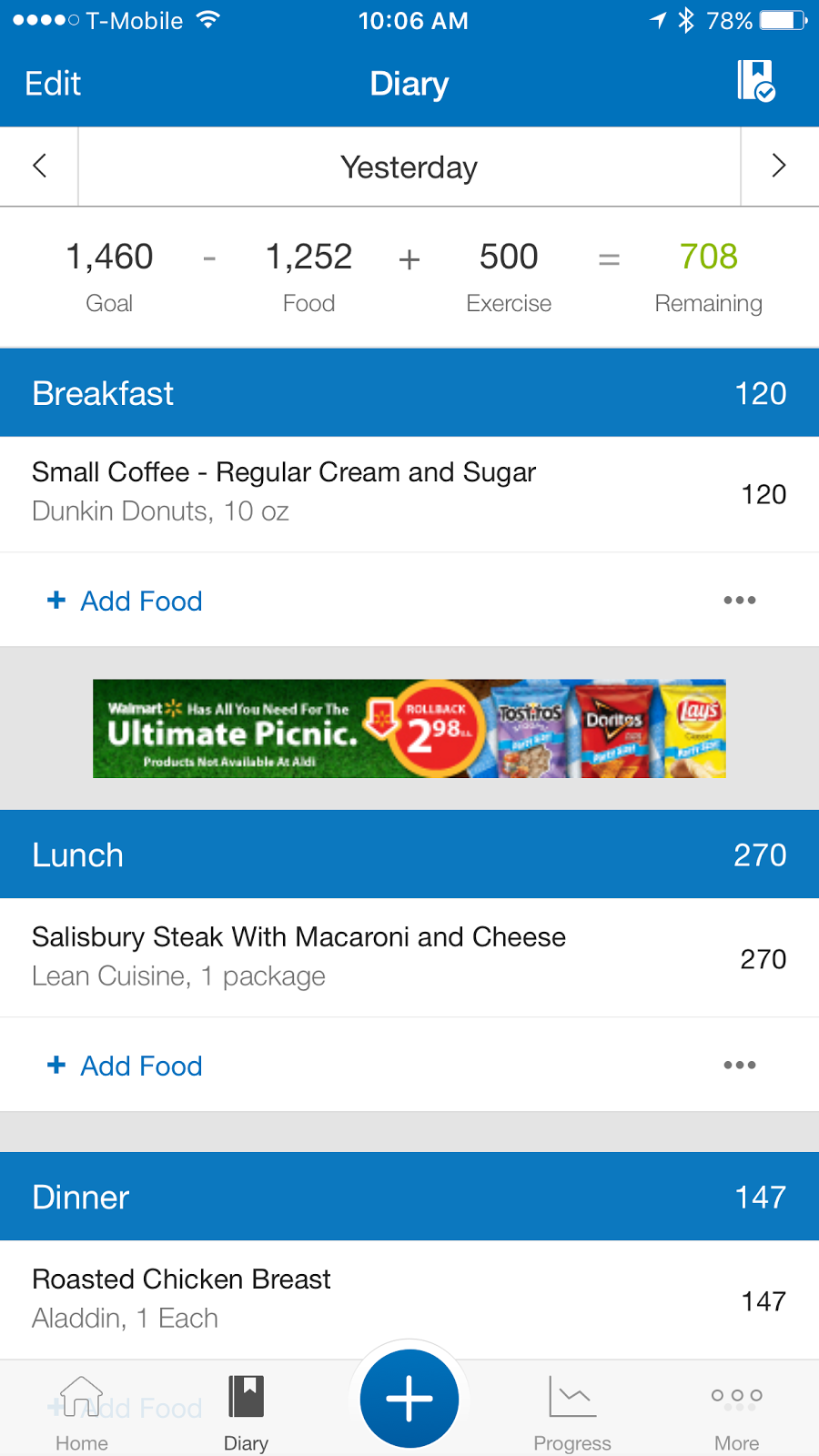
For "food logging pact" you have to use a partner app. The one that I use is “My Fitness Pal” and like the exercise pact there are certain rules and limitations. You have to log all your food the day you ate it also known as “the pact day”, there must be three “meals”, and you have a minimum of 1200 calories and a maximum of 1450 for it to be a successfully logged day.


The “veggie pact” is the easiest and the name is deceiving. You can eat or drink fruit or vegetables. You need to take a picture that gives evidence that you are consuming it and that it is a full serving of fruit or vegetable. Users take a picture and the community of Pact users determines whether they feel it fits the definition of fruit or vegetable. In my opinion they are very lenient because I have seen fruit juice, smoothies, and a handful of dried fruit counted.


Each “pact” has a different reward value. If you participate, at the end of the week they send you a “rundown” with a record of what you completed and how much money you earned or owe. If you want to retrieve your rewards you can request a preloaded debit card or you can connect your PayPal account (which is what I did). The minimum amount that can be transferred depends on which you method of payment you choose. I believe it is $20 for the card and $10 for PayPal. The way I think about it is that “Pact” helps me pay my monthly gym membership fee. The app is available for Android https://goo.gl/FzK9gi and iPhone https://goo.gl/olXIC7

Thursday, August 11, 2016

Kids Device Management

With children going back to school I wanted to review something that would be related in some way. I decided on managing your child’s device. How can parents limit the time their children spend on their mobile device and restrict what do on that device. What I learned is that the more control that you want the more expensive the solution.

First, I’d like to say that if you have an Android device for your child you should check out this video podcast Android App Arena episode on “Kids Device Management” https://twit.tv/shows/android-app-arena/episodes/101 The host does a good job of showing users that have a Jellybean or more recent Android device how to set it up for kids.

Parental Control Apps


Nova Laucher (Free / $4.99) Android only – This allows users to delete apps, widgets, and search bars from the home screen of an Android device. It isn’t a device control exactly instead it is a way to customize an Android device in a way that makes it more kid friendly. http://novalauncher.com/


Dinner Time Plus app icon
DinnerTime Plus ($3.99 ) iOS, Android, Amazon – Parents have the ability to shut off the internet connection and access to apps either at the press of a button on their device or by setting up a schedule. http://www.dinnertimeapp.com/


Our Pact app icon
Our Pact (Free) iOS, Android – Parents can do the same thing as the DinnerTime app for free. The only flaw that I saw was in the iOS app there are certain apps that children still have access to and unlike Android parents cannot download a launcher allowing them to get rid of Apple apps and search boxes (this may change in the iOS 10 options). http://ourpact.com/


Kidslox app icon
Kidslox ($6.99) iOS, Android, Amazon, Windows, Mac –This app has the added benefit of reporting how long your child performed certain tasks on the device. It also has a “Kidlox mode” for parents that share a device with a child, basically restricting what they can do with the device. https://kidslox.com/en/#home-app-screen


More Control

Curbi app icon
Curbi ($6.99 monthly) This app allows parents the ability to filter certain apps, websites, categories, and the ability to make purchases (both app store and in-app). It has detailed reporting of your child’s activity. It has the ability to schedule use or revoke privileges at any time. http://www.curbi.com/


Net Sanity device management
Net Sanity $6.95 monthly or $59.95 annual) A comprehensive digital management platform it allows parents the ability to filter and monitor use of all Internet enabled devices. It gives parents the ability to receive detailed reports and granular permission down to specific websites or actions. https://netsanity.net/


Circle device management device
Circle ($99 device for computer, $9.95 monthly) The Circle device is a home device that allows the parent or administrator to control access per device. The user can shut off access to all devices (or place restrictions on them) or place restrictions on each device individually. Users can set-up permissions for guests that use their network (in case your child has friends over). This allows control of access to mobile devices, computers, and even set-top boxes like gaming consoles or TV streaming. The device can connect to your router using Wi-Fi or a network cable. It has a battery so it cannot be unplugged. They are a subsidiary of Disney so everything has a very polished design. There is also a monthly device management app for cellular enabled phones, tablets, etc. that parents want control and reporting abilities it is called myCircle. https://meetcircle.com/

Wednesday, August 3, 2016

Two Factor Authenication

Google Authenticator
Protecting Yourself against Cyber Threats
One of the things that I am most passionate about teaching people is how to keep themselves safe when it comes to using technology. As more and more of our personal and financial information are available digitally, we have to be extra cautious. One of the greatest ways to protect yourself is to know what to protect and how to protect it best. Recently I had someone try to hack me multiple ways and it prompted me to write about this week’s topic: two factor authentication.

Last Pass Authenticator
What is Two Factor Authentication
You may have seen the option to enable two factor authentication on a website that you log into but you may not have understood what that means or why they offer it. The idea is that you have two forms of identification.
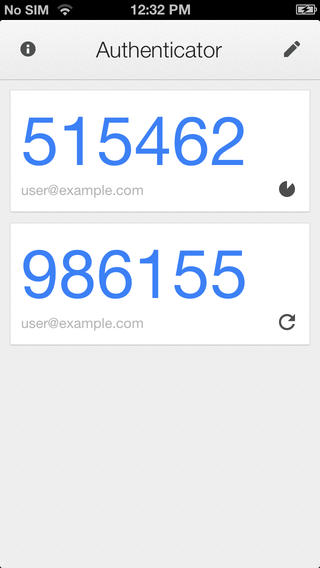
Usually it is something you know, like a password or the answer to a question and something you have on you like your phone. Some people confuse two step authentication where they ask for two passwords or a password and a personal question. Unfortunately, these are two step systems are not much more secure than a simple password because hackers can use social engineering (researching your personal information) to figure these out. The most common two factor authentication is done by having an SMS (text) message sent to your phone. Other two factor options are random number generating authentication apps like Google Authenticator (Android https://goo.gl/sbBxn and iOS https://goo.gl/lvsE1 ) but there are others by LastPass http://goo.gl/P9P1nF and Duo Mobile http://goo.gl/TLVk3D , an automated phone call where the number is spoken; a number sent directly to your phone through a manufacturer push message, or what is known as a Yubikey which is a USB device that provides a unique long string of numbers https://www.yubico.com . While some have argued that SMS (text) as a factor can be broken it is difficult and expensive to do so.
Yubikey

Where You Should Use It
The simple answer would be everywhere it is offered but that can be tiresome. Your e-mail is the most important because if someone can get into your e-mail they can lock you out by changing the password and can also use the “Forgot My Password” on other websites to get in and wreak havoc. Then next important would be anything financial: bank, retirement, and 
social security. Last would be shopping and social media websites. Here is a full list of websites that you can use two factor authentication: https://twofactorauth.org/ You can usually turn it on in the settings portion of the website or in your account information area.


 .

If you are interested in knowing more:

Cutts, Matt. Please turn on two-factor authentication. 8/6/2012. https://www.mattcutts.com/blog/google-two-step-authentication/

Constantin, Lucian. 5 things you need to know about two-factor authentication. 3/31/2016. http://www.pcworld.com/article/3050358/security/5-things-you-should-know-about-two-factor-authentication.html

Franceschi-Biccierai, Lorenzo and Joseph Cox. The Motherboard Guide to Not Getting Hacked. 8/2/2016. http://motherboard.vice.com/read/the-motherboard-guide-to-not-getting-hacked